
A training treat is purchased as food but used as a tool. For a UK training school, it must be quick to deliver, easy to carry and suitable for repeated small rewards. A pet shop needs to explain those properties without turning a snack into a promise about behaviour or health. The buying decision therefore starts with the training session rather than the front of the packet.
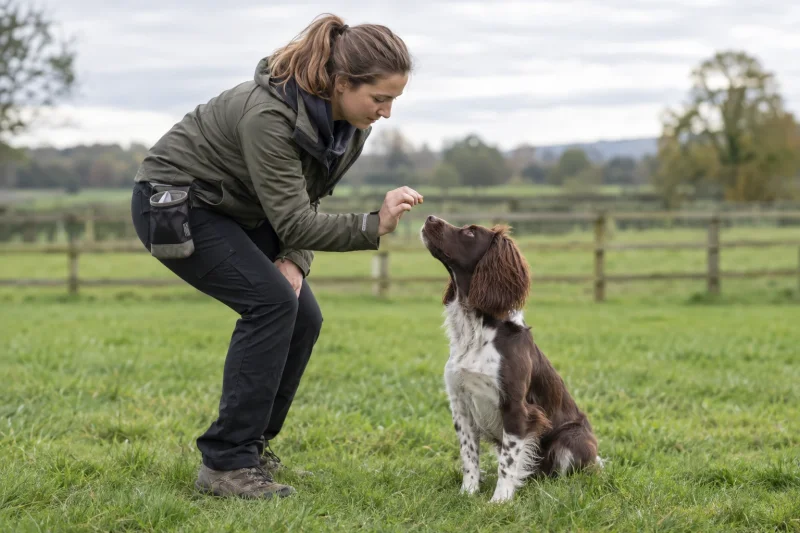
Write the session brief before choosing flavours
Separate quiet indoor practice, outdoor recall classes and individual lessons. Trainers may need a more appealing reward in a distracting environment, while an indoor class may prioritise clean handling. Ask the intended customer how often rewards are offered, whether pieces need splitting and whether several dogs with different dietary needs attend. Keep owner-approved alternatives available rather than assuming one recipe suits every dog.
Dogs Trust's reward-based training guidance describes small food rewards and accounting for treats within feeding. That supports the use case; it does not establish that a particular commercial treat is low-calorie or suitable for every dog. Obtain the product's own feeding and composition information.
Compare cost per usable reward
A bag price can conceal a poor training format. Large pieces may need cutting, brittle pieces may leave crumbs and sticky pieces may slow delivery. Compare piece-weight variation, breakability, grease transfer and the amount left in the pouch after a normal session. Keep the assessment conditions the same for each sample.
For illustration, a 100 g pack with an average 0.5 g piece contains approximately 200 pieces before breakage. At an illustrative £3 retail price, that is 1.5 pence per piece. These figures are a calculation example, not a Xinji quotation or a daily allowance. Weigh a representative sample from the proposed batch; count and weight will vary.
Calorie information needs a clear basis
Request energy per 100 g and the method used to determine it. If the supplier also quotes calories per piece, confirm the assumed piece weight. A mathematical example: 320 kcal per 100 g equals 3.2 kcal per gram, so a 0.5 g piece would contain about 1.6 kcal. This does not describe an offered formula. Avoid printing a per-piece number without a stable size specification and a verified energy value.
Ask for the ingredient list, analytical information, intended species, appropriate age or other restrictions, storage directions and feeding instructions. Veterinary advice is needed for animals with dietary conditions. A training-school purchase should never bypass an owner's confirmation about what their dog may eat.
A useful sample trial has four separate checks
- Handling: open the bag, use it with dry hands and transfer a small quantity to a clean pouch. Record grease, odour transfer and crumbs.
- Portioning: inspect variation and splitting. Record the usable yield rather than relying on the best-looking pieces.
- Supervised acceptance: with owner agreement, record whether dogs accept the reward and how readily it can be delivered. Do not force acceptance or treat a small trial as a scientific efficacy study.
- Pack usability: check opening, resealing and legibility. Follow the stated storage instructions; a pocket or car trial cannot establish shelf life.
Use an agreed reference sample and a simple score sheet. Record batch number, date, storage before testing, reviewer and reasons for rejection. Decide which results would stop an order before seeing a price discount.
Training-school supply and shop shelves need different packs
A school may use stock quickly, but a large bag opened repeatedly still needs suitable handling. Retail customers may prefer a portable resealable format. Quote these separately, including pack material, net weight, carton quantity and proposed opening instructions. Do not split bulk stock into informal retail bags without reviewing the responsibilities attached to repacking and labelling.
Once a treat has passed its practical trial, use our UK label-readiness and retail-pack guide to organise the information needed for sale. The product trial decides whether the reward works in practice; the documentation review decides whether the proposed presentation is ready to launch.
Agree repeat-order tolerances and substitutions
Specify recipe reference, piece size range, acceptable breakage, packaging and the documents supplied per batch. Agree how changes to ingredients, processing or pack materials will be communicated. Substituting a visually similar reward without notice can undermine a trainer's dietary information and customer trust. Delivery performance should be measured separately from acceptance and quality.
For an own-brand project, our private-label range planning article explains how packaging commitments and replenishment interact. Start with the reward format that has passed review instead of ordering many flavour variations at once.
Prepare a brief that a manufacturer can evaluate
Send the intended training environment, dog size range, desired piece format, proposed retail and professional packs, expected quantities and required documents. Xinji Pet Food can discuss treat supply or own-brand development against that brief. Formula availability, minimum orders and suitability for the destination market must be confirmed for the specific proposal; a successful sample is the start of specification control, not the end.